







How to Manage a Newborn and Work Without Doing It All Yourself
Going back to work with a baby at home is one of those things nobody can fully prepare you for, no matter how many spreadsheets you make. Here’s the part worth holding onto: you can absolutely do this, and you get to do it your own way.
Some days you’ll feel like you’re nailing both. Other days the washing basket has opinions, the inbox has opinions, and the baby has very loud opinions, usually at 3am. Both kinds of day are normal, and neither is a verdict on how you’re doing.
This isn’t a guilt piece. What follows is a practical, honest look at how to keep a newborn and a job running in the same week, and how to build a setup that works for you rather than one you have to keep rescuing. Still in the lead-up? Our preparing-for-baby checklist covers the before.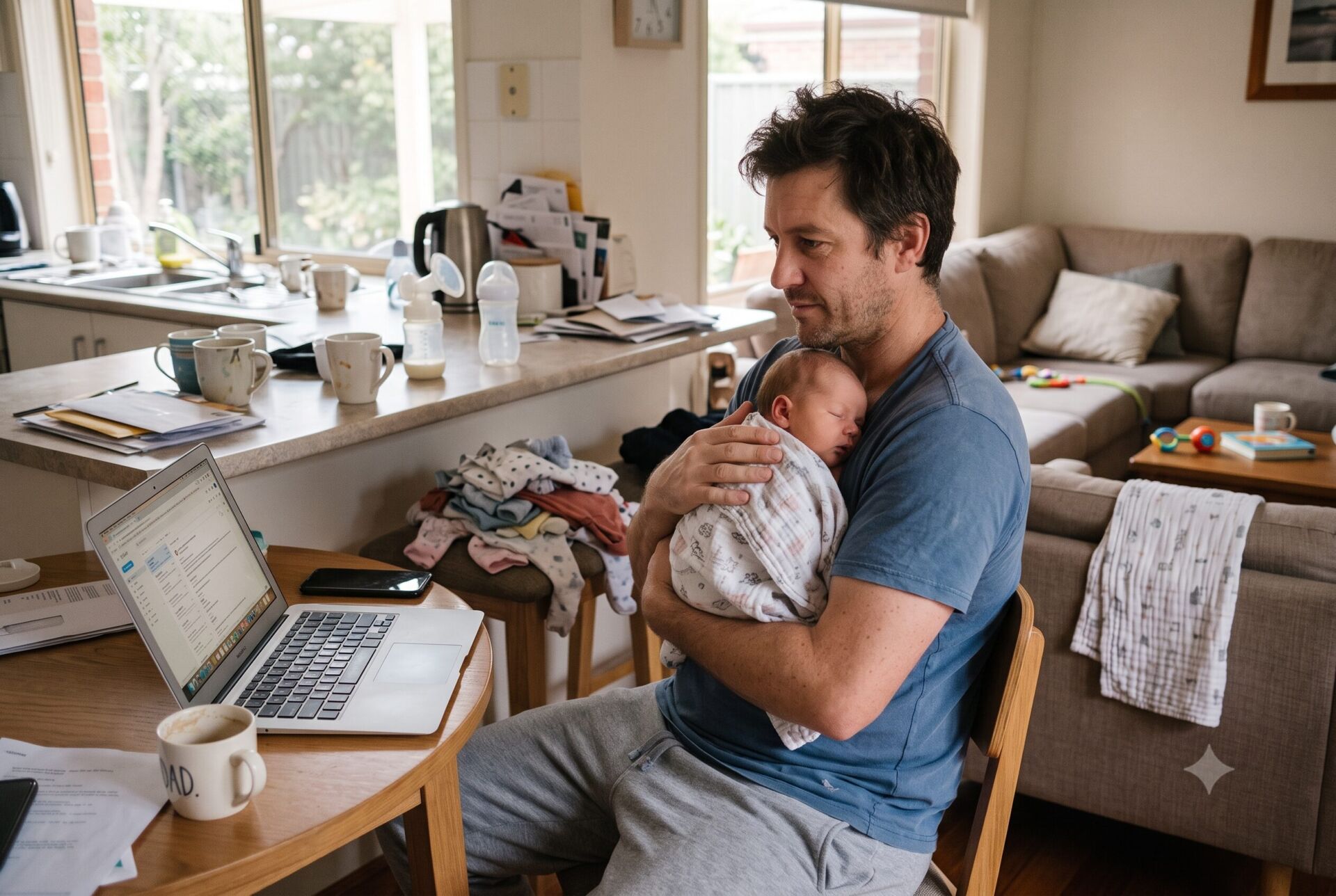
1.The first few weeks back – lower the bar on purpose
The temptation is to prove you’ve still got it. To answer every email within the hour and have the house looking like nothing changed.
You don’t have to, and you’ll cope better if you don’t. The parents who thrive in the early weeks back are usually the ones who decided, on purpose and in advance, what they were going to stop doing: ironing sheets, cooking from scratch every night, replying to non-urgent messages the same day.
Pick your genuine priorities, back yourself, and let the rest sit. A slightly messy house says nothing about you except that there’s a newborn in it.
2. Batch the small stuff into the gaps
A newborn’s day comes in fragments, so your admin has to as well. Trying to find a clear hour is a losing game for now.
Keep a running list on your phone of the tiny tasks that pile up, then knock them over during a feed or a contact nap. Book the appointment, pay the bill, order the nappies. Doing five small things in ten minutes feels better than staring at a list of twenty. Save the housework and the deep-focus work for when your hands are actually free, which brings us to the thing most people underestimate.
3. The invisible load is real, and it’s mostly domestic
Here’s what nobody tells you about the mental side of it. A big part of the tiredness is the constant background hum of remembering everything else: dinner, whether there are clean towels, when the floors were last done.
Naming that hum is the first win, because once you can see it, you can start handing pieces of it off. Two parents can split the visible jobs evenly and still have one person carrying the whole invisible list in their head. Some of that load stays with you, like the decisions only you can make. But a good chunk of it is just housework wearing a disguise, and housework is the one thing you’re allowed to give to someone else.
4. Where the household help actually fits
Many parents have been treating cleaning as the thing they’ll get to eventually, when there’s time. Waiting for that clear pocket of time is the trap, because it rarely arrives. Deciding to get the help instead is one of the smartest moves you can make right now.
This is what Family Clean does. Since 1994 we’ve matched households with vetted, police-checked, insured Home Assistants and Cleaners for their home, someone who becomes a familiar face and learns how you like things done. Everyone we match is carefully checked, so you can feel comfortable having them in your home from day one.
There are two ways in.
A Home Assistant is ongoing, personalised help matched to your household, at $60/hr. It covers cleaning, housekeeping, laundry and general home support, from the same trusted person who learns how your home works. Your neighbour thinks folding the baby’s clothes is too personal, and you’d happily hand over the entire nursery drawer. That’s the point of matching to a household: the help fits how you actually live.
If you want something lighter and more targeted, Barefoot Basics focuses on the two high-impact jobs that make a tired house feel human again: the bathrooms and the floors. It’s $50/hr, and it’s a gentler way in when you want a smaller, focused scope of help.
Both run across Brisbane, Sydney, Melbourne, Perth, Adelaide and Canberra.
5. Protect one thing that’s just yours
When you’re splitting yourself between a job and a baby, the first thing to disappear is anything that’s only for you: the walk, the hot coffee, ten minutes of reading that isn’t a work document.
Keep one. Just one. It doesn’t need to be an hour of self-care with candles. Small and unglamorous is fine, and it will do more for your energy than another cleaned bench ever will. Handing off the housework buys back that window, and protecting it is one of the most useful things you can do for everyone who leans on you.
6. What you don’t need to have figured out
You don’t need a colour-coded routine, or to have decided how you’ll feel about leaving your baby before you’ve done it.
You don’t need to be the parent who does everything and the employee who misses nothing. That version doesn’t exist, and letting go of chasing it frees up real energy for the things that actually matter.
Getting help around the house is a sign you’re running the show well. Plenty of the parents who look like they’ve got it all together simply worked out early that bringing in home help was the thing that gave them their time and headspace back. You’re more than allowed to be one of them. Once you’re back in the swing of it, our guide to work-life balance with a baby picks up where this leaves off.
7. FAQ – managing a newborn and going back to work

Going back to work with a newborn asks a lot of you, and you’re more capable of it than you feel at 3am. You don’t have to carry the housework on top of everything else, and choosing to hand it off is you managing the load well. If ongoing help sounds right, take a look at the Home Assistant service; if you’d rather start with the bathrooms and floors, Barefoot Basics is the gentler way in. The booking page is there when you’re ready, and so are we.